What Is a Billing Engine?
A billing engine is the software layer that turns a sale into a correct, compliant invoice: tax rules, totals, discount limits, payment allocation, and document generation. A plain-language explainer with what to test before you buy.
A billing engine is the software layer that turns a sale into a correct, compliant invoice: it applies tax rules, calculates totals, sequences invoice numbers, records payment, and hands the finished document to a printer, PDF, or customer channel. It is the part of a billing product that 'knows' how a bill is built, so staff do not have to rebuild it by hand every time.
This guide explains what a billing engine actually does, how it differs from the interface around it, and what to test before you rely on one for your counter.
What a billing engine actually does
A billing engine is not one screen. It is the calculation and document layer behind the screens: line-item pricing, tax determination (including GST splits like CGST, SGST, and IGST), discount application with limits, payment allocation, invoice numbering, and receipt generation.
Think of it as the difference between a calculator and the person pressing the buttons. The interface collects what the cashier sees; the engine decides what the invoice legally and mathematically contains.
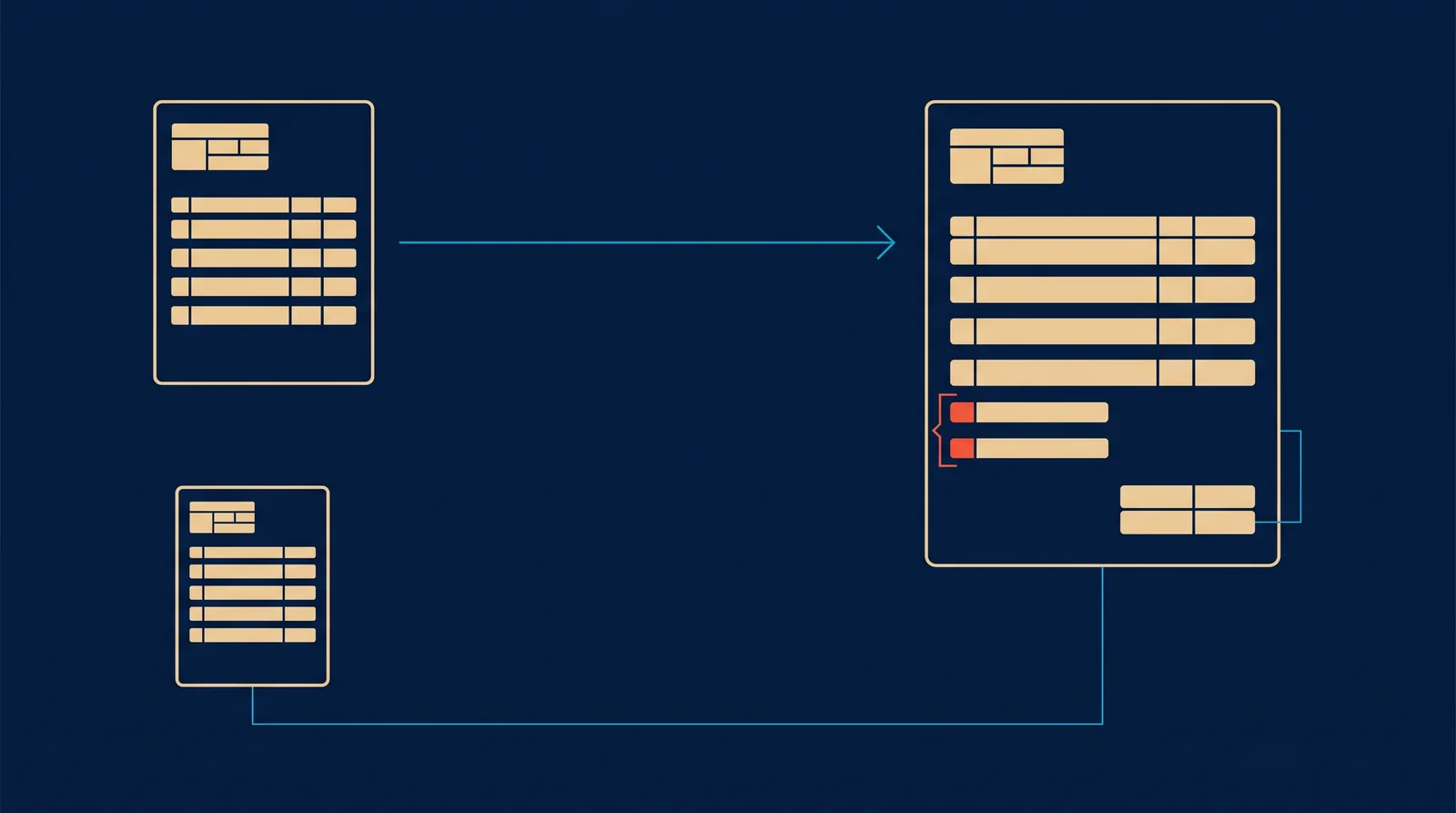
Billing engine vs billing interface
The interface is what the cashier touches: search bar, cart, payment buttons, receipt preview. The engine is what guarantees the result is a valid invoice: the right HSN/SAC code, the correct CGST/SGST or IGST split, a sequential number, and totals that match the line items.
A product can have a beautiful interface and a weak engine. The engine is where compliance and correctness live — test it with edge cases, not just a happy-path sale.
Interface vs engine
| Aspect | Billing interface | Billing engine |
|---|---|---|
| Purpose | Help the operator move fast | Guarantee the document is correct |
| Examples | Search, cart, payment buttons, preview | Tax rules, discount limits, numbering, totals |
| Failure mode | Slow or confusing for staff | Wrong tax, broken sequence, incorrect totals |
| How to test | Time a real rush-hour sale | Edge cases: split payments, refunds, discounts, tax changes |
Core capabilities of a billing engine
What the engine does on every sale
These steps happen automatically in a well-built engine — the operator should not have to think about them.
- 01Price line items
Multiply quantity by price, apply variant or customer-specific pricing.
- 02Determine tax
Apply the correct GST rate and split into CGST/SGST or IGST based on place of supply.
- 03Apply discounts
Enforce limits, route out-of-policy discounts for approval, and record the decision.
- 04Total the invoice
Sum taxable value, tax, and any cess; produce a coherent grand total.
- 05Allocate payment
Match cash, UPI, card, credit, or partial payment against the invoice.
- 06Issue the document
Generate the receipt or invoice PDF with a sequential number and tax breakup.
Why GST makes the engine the critical part
For Indian businesses, the invoice is a compliance document, not just a sales record. CBIC Rule 46 lists the particulars a tax invoice must carry — GSTIN of the supplier and recipient where applicable, HSN or SAC, taxable value, rate and amount of tax, and more.
An engine that 'remembers' these fields and produces them consistently matters more than a dashboard that looks impressive. The correct invoice is the daily deliverable; everything else supports it.
How to test a billing engine before buying
Take these cases into a trial
- A B2B sale with a customer GSTIN — does the invoice carry the required fields?
- A discount above the cashier limit — is it blocked, routed for approval, or silently applied?
- A split payment across cash and UPI — does the receipt and day-end total reconcile?
- A refund of a partially paid invoice — does the stock and payment record move correctly?
- Two invoices at the same second — does the number sequence stay unique and sequential?
- A tax rate change mid-month — does the engine apply the correct rate per invoice date?
Where Nox-Billings fits
Nox-Billings is a GST-aware billing engine wrapped in counter-focused interfaces: GST invoices with CGST/SGST/IGST splits, HSN/SAC codes, discount limits with manager approval, cash/UPI/card and mixed payments, receipts, and day-end reports. It is deliberately scoped as billing and counter operations software, not a full ERP.
Frequently asked questions
What is a billing engine?
A billing engine is the software layer that computes invoice totals, applies tax rules, enforces discount limits, allocates payments, and produces the finished billing document.
What is the difference between a billing engine and a billing interface?
The interface is what staff operate — search, cart, payment buttons. The engine is the rules layer that guarantees the invoice is correct and compliant.
Does a billing engine need to handle GST?
For Indian businesses, yes — a billing engine should determine the correct GST rate and produce the CGST/SGST or IGST breakup required on a tax invoice.